

Screening tests during pregnancy are examinations performed to assess the expectant mother’s health and the baby’s development and to determine the likelihood of certain chromosomal or structural differences. These tests do not provide a definitive diagnosis; instead, they help assess the risk of conditions that may require closer monitoring of the pregnancy.
Screening tests during pregnancy are performed through blood tests, ultrasound measurements, or a combined evaluation of these methods, depending on the expectant mother’s individual characteristics and the gestational week. The results are interpreted together with information such as age, medical history, and ultrasound findings. A high-risk result does not necessarily mean that the baby has the condition in question. Diagnostic examinations may be considered when deemed necessary.
What Screening Tests Are Performed During Pregnancy?
Screening tests during pregnancy are planned to evaluate the likelihood of certain chromosomal differences and developmental problems in the baby. Blood samples obtained from the expectant mother, ultrasound measurements, and data such as gestational age are assessed together. These tests can be used to calculate the risk of Down syndrome, Edwards syndrome, and Patau syndrome.
Each screening test indicates whether the likelihood of a particular condition is low or high rather than providing a definitive diagnosis. A high-risk result does not necessarily mean that the baby has a chromosomal difference. In such cases, detailed ultrasound, genetic counseling, or diagnostic tests may be considered.
| Test | Gestational Week | Primary Purpose |
| Double marker test | Usually weeks 11-14 | To assess the risk of trisomy 21, 18, and 13 using nuchal translucency measurement and markers in the expectant mother’s blood |
| Triple marker test | Usually weeks 15-20 | To calculate the risk of certain chromosomal differences and neural tube defects by analyzing three different markers in the expectant mother’s blood |
| Quadruple marker test | Usually weeks 15-22 | To assess the likelihood of certain chromosomal differences, particularly trisomy 21, using four biochemical markers |
| NIPT/Fetal DNA test | Usually from week 10 onward | To assess the risk of specific chromosomal differences, particularly trisomy 21, 18, and 13, by analyzing cell-free fetal DNA in the expectant mother’s blood |
The weeks during which the tests are performed may vary depending on the method used, the laboratory protocol, and the characteristics of the pregnancy.
Double Marker Screening Test
The double marker screening test is performed between the 11th and 14th weeks of pregnancy. The test aims to assess the likelihood of certain chromosomal differences.
Triple Marker Screening Test
The triple marker screening test is a blood test generally performed between the 15th and 20th weeks of pregnancy. Three biochemical markers in the expectant mother’s blood are analyzed to assess the risk of certain chromosomal differences and neural tube defects.
Quadruple Marker Screening Test
The quadruple marker screening test is a screening method generally performed between the 15th and 22nd weeks of pregnancy by analyzing four biochemical markers in the expectant mother’s blood. The test enables risk assessment particularly for Down syndrome and certain neural tube defects.
NIPT (Fetal DNA Test from Maternal Blood)
The NIPT test is a screening method that analyzes cell-free fetal DNA fragments in the expectant mother’s blood from the 10th week of pregnancy onward.
For detailed information about the testing process and the chromosomal differences assessed, you can read our article titled Fetal DNA.
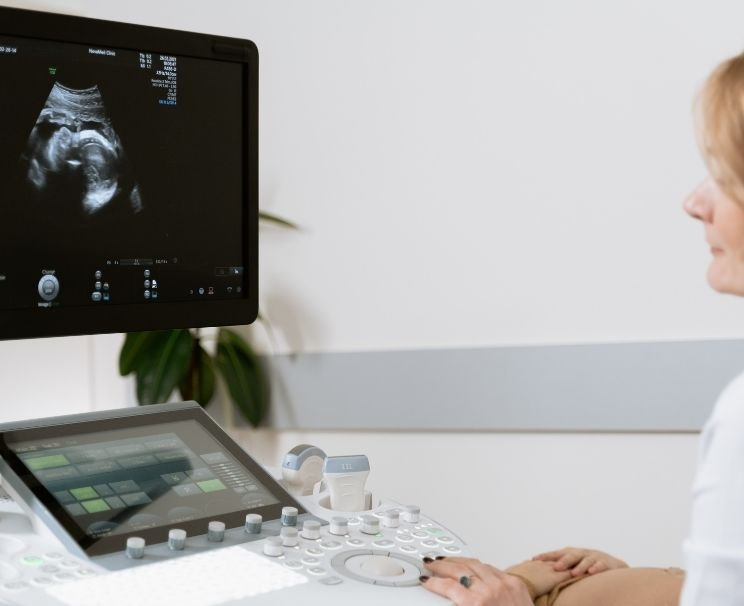
At What Week Are Screening Tests Performed During Pregnancy?
The period during which screening tests are performed in pregnancy is determined according to the type of test and the condition being assessed. Each test must be performed at the appropriate stage of pregnancy to obtain a meaningful result. Test timing is planned not only according to the date of the last menstrual period but also by considering ultrasound findings and previous assessments.
The main factors that may affect the period during which a screening test is performed include:
- Confirmation of gestational age through ultrasound measurements
- Presence of a singleton or multiple pregnancy
- Detection of risk in previous screening results
- The expectant mother’s age and medical history
- Having passed the appropriate time window for the test
- Whether the pregnancy occurred naturally or through assisted reproductive techniques
An incorrectly calculated gestational age may make it difficult to interpret some test results. If there is a discrepancy between the date of the last menstrual period and ultrasound measurements, the test date may be rescheduled. Ultrasound measurements are particularly important for determining gestational age in expectant mothers with irregular menstrual cycles.
If a screening test cannot be performed within the recommended period, another method appropriate for the gestational age may be considered. However, because the conditions assessed and the methods used to calculate risk differ, the tests may not be directly interchangeable. The appropriate examination should be selected based on personal health information and the course of the pregnancy.
Screening results do not provide a definitive diagnosis. If a high risk is identified, detailed ultrasound examination, genetic counseling, or diagnostic testing options are evaluated by the physician. To obtain more comprehensive information about pregnancy tests, you can review our content titled “Pregnancy Test.”
Why Are Screening Tests Performed During Pregnancy?
Screening tests during pregnancy are performed to assess the likelihood of certain conditions that may affect the health of the expectant mother and the baby.
Blood samples obtained from the expectant mother, ultrasound measurements, and personal information related to the pregnancy are assessed together to calculate the risk of certain chromosomal differences and developmental problems. This assessment helps identify at an early stage situations that may require closer monitoring of the pregnancy.
The main purposes of these tests include:
- Determining the risk of chromosomal differences such as Down, Edwards, and Patau syndromes
- Assessing certain neural tube defects that may affect the development of the brain and spinal cord
- Identifying findings that may require more detailed examination during pregnancy follow-up
- Informing the expectant mother and planning the subsequent assessment process

A low-risk screening result does not show with certainty that the condition assessed is absent. Similarly, a high-risk result does not mean that the baby definitely has the chromosomal or structural difference in question. For this reason, screening and diagnostic tests are considered separately. Results should not be interpreted in isolation but together with other examination findings and the overall course of the pregnancy.
If a high risk is identified, the results are considered together with the gestational week, ultrasound findings, and the expectant mother’s medical history. When deemed necessary, genetic counseling, detailed ultrasound, or diagnostic methods such as amniocentesis and chorionic villus sampling may be considered.
Frequently Asked Questions About Screening Tests During Pregnancy
The timing varies according to the type of test. NIPT can be performed from the 10th week onward, the double marker test between weeks 11 and 14, and the triple and quadruple marker tests during the second trimester.
The double marker screening test is not performed to determine the baby’s sex. Ultrasound images obtained during these weeks may not provide definitive information about sex.
The double marker screening test is performed between weeks 11 and 14, while the triple marker screening test is generally performed between weeks 15 and 20.
Screening tests are not mandatory. After their benefits and limitations have been considered, the decision is made based on the expectant mother’s preference and the physician’s opinion.
For information about screening tests during pregnancy and an assessment process appropriate for your gestational week, you can contact Denge Tıp.