

Pregnancy test is a method used to confirm or dismiss the suspicion of pregnancy. Many women consider taking this test when experiencing signs like missed periods, nausea, or fatigue. These tests can be performed using either urine or blood samples, and most detect the presence of the pregnancy hormone, HCG (Human Chorionic Gonadotropin).
Pregnancy test is available for use both in laboratory settings and at home. A blood test can detect HCG hormone levels earlier, providing results even before a missed period. However, this test requires a visit to a healthcare facility. Home urine tests are a convenient and practical option, offering more accurate results when taken with the first urine of the day. If the test result is positive, consulting an obstetrician to confirm the pregnancy is advisable.
Early Pregnancy Symptoms
The first signs of pregnancy appear a few weeks after conception and vary for each individual. However, common symptoms include:
- Missed Period: One of the most common and earliest indicators of pregnancy. Missing a period during the expected cycle may raise suspicion of pregnancy.
- Breast Tenderness: Increased hormone levels during pregnancy may cause fullness, soreness, or sensitivity in the breasts.
- Nausea and Vomiting: Often more prevalent in the morning, nausea commonly occurs during the first trimester of pregnancy.
- Fatigue and Lethargy: Changes in hormone levels in early pregnancy can lead to feelings of fatigue.
- Frequent Urination: As the uterus begins to expand and hormone levels shift, pressure on the bladder increases, leading to a need for more frequent urination.
- Sensitivity to Smells and Appetite Changes: Sensitivity to specific food odors or changes in appetite may also indicate pregnancy.
How to Take a Pregnancy Test
The question “how to take a pregnancy test” is one of the first things many people wonder about when they suspect pregnancy. At-home pregnancy tests, with their practical use, help obtain reliable result in a short time.
The basic principle of the test is based on detecting the HCG hormone secreted through urine. When fertilization occurs, the fertilized egg attaches to the uterine wall, causing hormone levels to rise, and the test detects this change.
To perform the pregnancy test correctly, the following steps should be followed:
- The first morning urine sample should be used, as hormone concentration is higher at that time.
- The test stick part of the device should be brought into contact with urine up to the indicated line.
- Wait approximately 3-5 minutes; at the end of this period, a clear test result will appear on the screen.
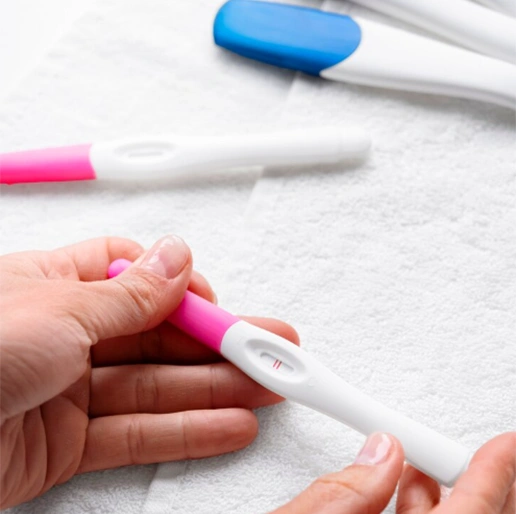
- A single line indicates a negative result, while a double line means the test is positive.
- If the lines are faint, the test should be repeated after a few days.
Even if fertilization has occurred, in some cases the HCG level may not have increased enough. Therefore, tests performed 7-10 days later than the expected period provide a more accurate evaluation. Tests performed too early can lead to false negatives, so patience is important.
When the result is positive, it is necessary to consult a gynecologist to confirm the pregnancy. The specialist will clarify the situation with the necessary blood analyses and monitor whether the pregnancy is progressing healthily.
Another frequently asked question is when to take an early pregnancy test. Tests performed shortly before a missed period may be misleading if hormone levels are low. Therefore, it is advisable to wait for the body to stabilize after fertilization and for HCG levels to rise later in your urine.
When Should a Pregnancy Test Be Taken?
The best time to take a pregnancy test may vary depending on the regularity of the menstrual cycle and the type of test used. Home urine tests generally provide more reliable results from the first day after the expected period has been missed. If the test is taken too early, the hCG hormone may not yet have reached a detectable level even if pregnancy has occurred. In this case, the result may be negative and misleading.
People with irregular menstrual cycles or those who do not know when their next period is due are advised to take a test at least 21 days after unprotected sexual intercourse. Some sensitive tests can be used a few days before the expected period. However, it is important to remember that a negative result obtained at an early stage does not definitively rule out pregnancy.
There are several points to consider when taking a test at home. These include:
- Following the manufacturer’s instructions, and
- Reading the result within the specified time frame.
Especially when testing at an early stage, using the first urine of the morning may make the result clearer because the hCG concentration is higher.
If the result is negative but the missed period continues, the test may be repeated after a few days or a blood hCG test may be performed. If the result is positive, an obstetrician and gynecologist should be consulted to confirm the pregnancy and plan the follow-up process.
Blood Pregnancy Test
The blood pregnancy test is one of the most reliable and early methods for detecting pregnancy. This test measures the level of the pregnancy hormone HCG (Human Chorionic Gonadotropin) shortly after conception to determine whether pregnancy is present.
Compared to a urine test, blood tests are more sensitive and can detect HCG approximately 6–8 days after conception. This allows individuals to learn about their pregnancy status even before pregnancy symptoms appear or a missed period occurs. Blood tests are conducted in a laboratory setting and usually provide results within a few hours.
A blood test result is interpreted based on the level of HCG hormone, indicating a positive or negative result. A positive result suggests a high likelihood of pregnancy, while low HCG levels may indicate an early-stage pregnancy.
While some women exhibit clear pregnancy symptoms, others may experience no symptoms at all. Early pregnancy symptoms can include nausea, dizziness, breast tenderness, and fatigue. However, the presence of these symptoms alone does not confirm pregnancy.
If pregnancy symptoms appear or a period is missed, a blood test can clarify the pregnancy status. The advantage of a blood test in early pregnancy is the ability to detect pregnancy before symptoms manifest. While urine tests are accurate, blood tests offer more precise results, especially in early stages where HCG levels are lower.
When pregnancy is suspected, a blood test is a reliable and early method for confirmation. While urine tests may indicate pregnancy at a later stage, blood tests provide results shortly after conception. Therefore, blood tests are often preferred by those wishing to confirm pregnancy early. However, it is crucial to consult a healthcare provider to interpret results accurately.
Blood Pregnancy Test Result
The blood test is one of the most reliable methods for confirming pregnancy. The HCG (Human Chorionic Gonadotropin) hormone detected in a blood pregnancy test can yield accurate results even in the early stages of pregnancy.
Following conception, HCG levels rise rapidly in the body and become detectable in the blood. This test can be taken approximately 6–8 days post-conception, allowing confirmation of pregnancy without waiting for a missed period. Positive blood test results suggest a high probability of pregnancy; however, low HCG levels may also indicate other health conditions.
Upon receiving a positive blood pregnancy test result, it is essential to consult an obstetrician. The physician may request additional tests to monitor whether the pregnancy is progressing healthily. Blood tests, more sensitive than urine tests, are an ideal choice for those who want to confirm pregnancy before symptoms appear.


How Long Does it Take to Get Pregnancy Test Results?
The time required to obtain a pregnancy test result differs depending on whether a urine or blood sample is used. With home urine tests, the result usually appears within a few minutes. However, it should be read within the time interval stated in the product instructions. Evaluating the result too early or too late may be misleading.
Results from urine tests performed at a healthcare facility are also generally available within a short time. For blood pregnancy tests, the sample is examined in a laboratory, so the turnaround time varies according to the facility’s workflow. The result may be available within a few hours, or it may not be ready until the following day depending on workload and the analysis process.
Two types of tests used to assess pregnancy through a blood sample are:
- Qualitative hCG test: This test indicates whether the hormone is present, reporting the result as positive or negative.
- Quantitative beta hCG test: This test measures the level of the hormone in the blood numerically.
A single beta hCG result does not always provide sufficient information about the course of a pregnancy. When necessary, the level may be measured again after a specified period and evaluated together with ultrasound findings.
After pregnancy has been confirmed, you can find detailed information about tests that may be performed in the following weeks in our article titled Screening Tests During Pregnancy.
What Are the Advantages of a Blood Pregnancy Test?
A blood pregnancy test can help detect pregnancy at an early stage because it can identify low levels of the hCG hormone. As it provides a more sensitive measurement than urine tests, it may be advantageous in assessments performed before a missed period has begun.
The main advantages of a blood pregnancy test include:
- It can detect low levels of the hCG hormone.
- It may help identify pregnancy earlier than a urine test.
- A quantitative test can provide a numerical hCG level.
- It is not directly affected by urine concentration or the amount of fluid consumed during the day.
- When necessary, it can be repeated at specified intervals to monitor changes in hCG levels.
- It may help evaluate unclear or conflicting urine test results.

Frequently Asked Questions
In most laboratories, results are available on the same day, usually within a few hours. The turnaround time may vary depending on the laboratory’s workflow and workload.
No. Fasting is generally not required for either a urine or blood pregnancy test. If the test is taken at home, the first urine of the morning may be preferred, especially at an early stage.
No. Fasting is not required for a beta hCG test. A blood sample can be provided at any time of day.
Yes. If the test is taken too early, the hCG level may not yet be detectable. If the missed period continues, the test may be repeated after a few days.
A blood sample must be provided at a healthcare facility for a blood pregnancy test. When interpreting the result, the timing of the test and changes in the values are considered together with the hCG level. However, a single measurement cannot definitively show whether the pregnancy is located in the uterus or progressing normally. When necessary, results should be interpreted alongside repeat measurements, an examination, and ultrasound findings.